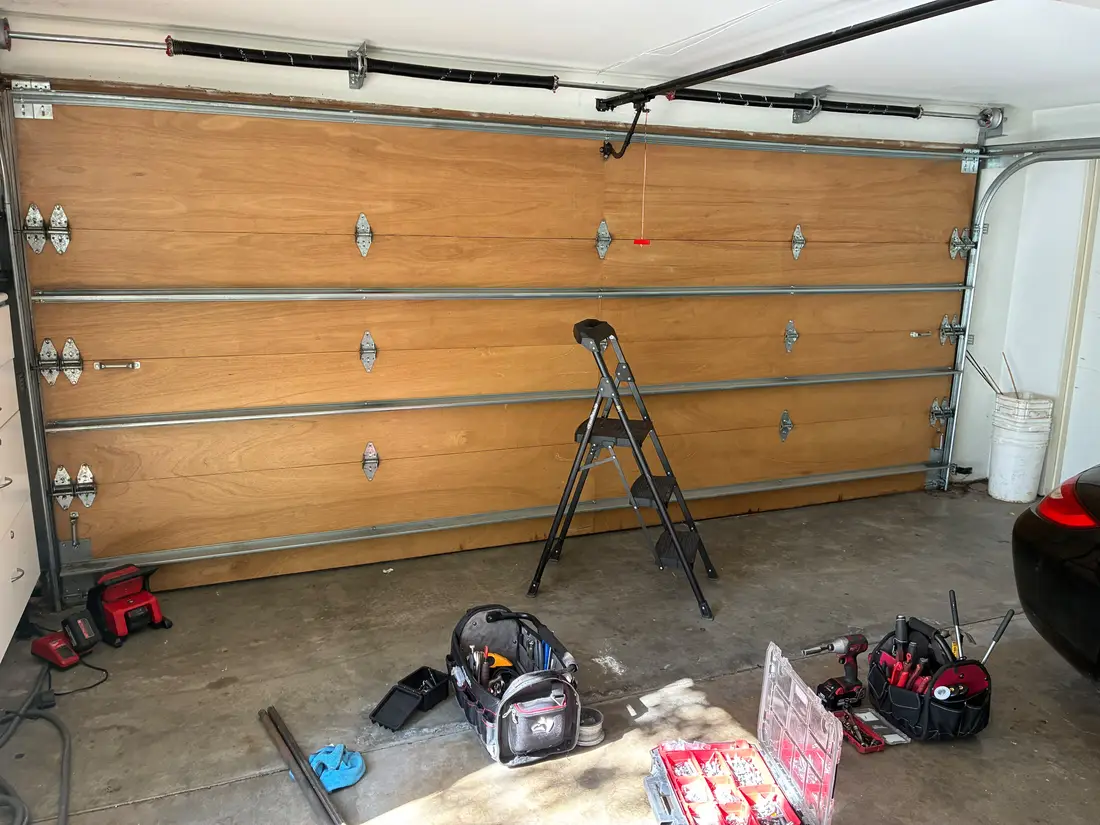
What a tune-up includes
Our tune-up is a structured, point-by-point service, not a squirt of oil and a wave. We test and adjust the door's balance; inspect the springs for fatigue, rust and stretch; examine cables for fraying, especially at the bottom brackets where corrosion starts; check rollers for bearing wear and flat spots; inspect hinges, brackets and the track for cracks, bends and loose fasteners; tighten all hardware; lubricate springs, rollers, hinges and bearings with garage-door-rated lubricant; inspect the weather seals; and test the opener's travel limits, force settings, auto-reverse and photo-eye sensors against a physical obstruction, the way the safety standard prescribes.
The balance test: the single most important check
Disconnect the opener and lift the door by hand. A balanced door feels light — ten pounds of effort, not a hundred — and stays put halfway up without drifting. If it is heavy, slams down, or shoots up, the springs are failing or were never sized right, and every cycle is quietly overworking your opener. The balance test takes two minutes during a tune-up and predicts more future repairs than any other check we do. When springs are the problem, we will show you the test results and explain your options — including spring replacement before the snap, on your schedule instead of the spring's.
Safety systems: tested, not trusted
Two systems protect your family. The photo-eye sensors near the floor stop and reverse the door when something crosses the beam. The auto-reverse stops and reverses the door when it contacts an obstruction. Both can drift out of alignment or fail silently — the door still opens and closes, and nobody knows the protection is gone until it matters. We test both with real obstructions on every tune-up, realign or repair what fails, and check the manual release so you can open the door in a power outage. If your opener predates photo-eye sensors entirely (pre-1993), we will recommend an upgrade — modern openers make the whole system safer and smarter.
Why annual? The math of wear
A household that uses the garage as its main entrance cycles the door 1,000–1,500 times a year. Rollers accumulate bearing wear, spring steel fatigues cycle by cycle, fasteners vibrate loose, and lubricant dries and washes out. None of this is visible from the driveway. An annual visit resets all of it: hardware tight, lubrication fresh, wear items flagged with an honest estimate of remaining life. Homeowners who tune up annually rarely meet us on an emergency call — and that is rather the point.
What you get at the end of the visit
You get a door that runs noticeably quieter and smoother, and a clear spoken summary of its condition: what we adjusted, what we lubricated, what is wearing and how long it has left, and anything we recommend — with prices, in writing, with zero pressure to decide on the spot. Pair the tune-up with our current special on the deal page and it is also the cheapest full inspection your door will ever get.
The tune-up report: what we flag, and how we grade it
Not every worn part needs replacing today, and a tune-up you cannot act on is just anxiety with paperwork. So we grade everything we find three ways. Working means the part is healthy and needs nothing. Watch means wear is visible and we estimate the remaining life in months or cycles — the part goes on your report so you can plan, not react. Replace is reserved for parts that are unsafe or about to fail: a frayed cable, a spring showing fatigue cracks, a roller shedding its bearing. Replace items come with written prices, and there is never pressure to approve them on the spot.
Homeowners tell us this grading is the most useful part of the visit: it turns a machine you know nothing about into a short, honest list you can budget around. Combined with the maintenance rhythm in our homeowner maintenance checklist, it is how a garage door quietly lasts twenty years.
Combine it with what you are already doing
The easiest way to keep the rhythm is to tie the tune-up to something you already schedule — the furnace check each fall, the gutter cleaning each spring. Put the garage door on the same annual list and it stops being another thing to remember. Between visits, the homeowner checks in our maintenance checklist take five minutes a month. That pairing — your eyes monthly, our full inspection yearly — is genuinely all a healthy door asks for, and it is why our repair trucks spend most of their time on doors that were never maintained at all.